
Rapid7 Intelligence & Response
Cyber Threat Activity Related to the Iran Conflict
Rapid7 is actively monitoring cyber threat activity related to the Iran conflict. Review observed activity, official advisories, and recommended defensive actions.


"As cyber threat activity ripples outward from the Iran conflict, Rapid7 is working around the clock to translate real-time regional intelligence into immediate, actionable protection for our customers worldwide."
How to protect your organization

Early-stage detection matters most
Campaigns are starting with initial access attempts, such as suspicious login activity, password spraying, or exploitation of exposed services. Detect early and prevent escalation.
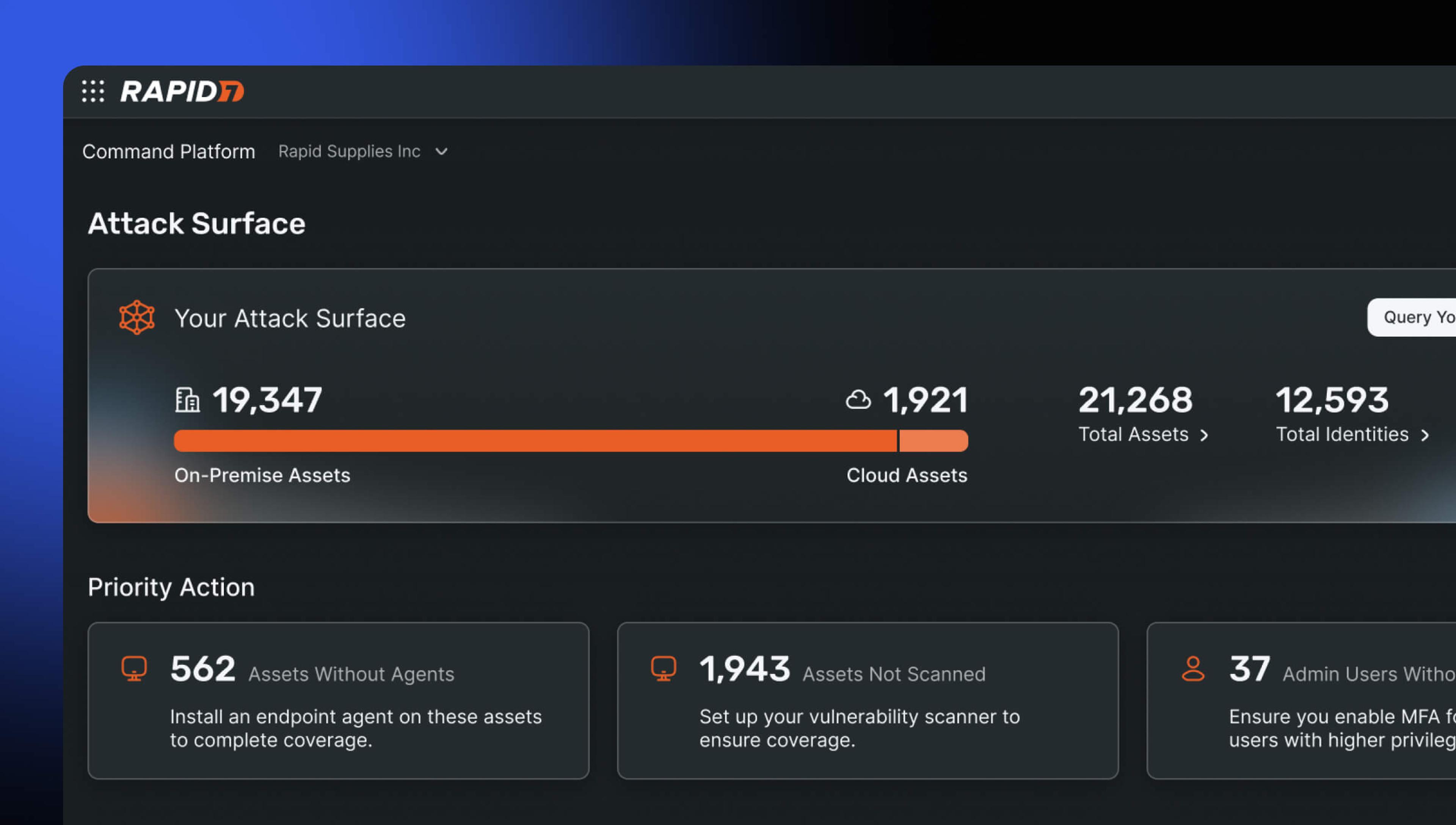
Have full attack surface visibility
Correlate telemetry from endpoints, network traffic, identity systems, and cloud infrastructure fully to understand attacker behavior rather than relying on isolated alerts.

Reduce dwell time
Attackers are moving quickly from access to impact. Use automation and well-defined workflows to remove the speed advantage by creating faster detection, validation, and response.

Understand expected attacker tactics
Iran-linked actors and affiliates rely on well-established techniques, not novel exploits. Phishing, credential access, DDoS, and edge-device compromise are high in their playbooks.
Early-stage detection matters most
Campaigns are starting with initial access attempts, such as suspicious login activity, password spraying, or exploitation of exposed services. Detect early and prevent escalation.
Have full attack surface visibility
Correlate telemetry from endpoints, network traffic, identity systems, and cloud infrastructure fully to understand attacker behavior rather than relying on isolated alerts.
Reduce dwell time
Attackers are moving quickly from access to impact. Use automation and well-defined workflows to remove the speed advantage by creating faster detection, validation, and response.
Understand expected attacker tactics
Iran-linked actors and affiliates rely on well-established techniques, not novel exploits. Phishing, credential access, DDoS, and edge-device compromise are high in their playbooks.
Iran cyber conflict hub
Rapid7 is tracking the conflict in Iran; providing support for our customers and the cybersecurity community. These publications look at the conflict’s cybersecurity implications from various angles and will be updated as new information is obtained.
Blog post
Muddying the Tracks: The State-Sponsored Shadow Behind Chaos Ransomware
Rapid7’s report finds that a likely Iranian state-sponsored group disguised its espionage operations as Chaos ransomware activity to obscure attribution and blend in with cybercriminal noise.

BLOG POST
Rapid7 detection coverage for Iran-linked cyber activity
Iran-linked cyber activity is blending disruption, espionage, and noisy hacktivism. Rapid7 is tracking campaigns, threat hunting, and updating detections to help organizations stay ahead.

BLOG POST
Iran’s cyber playbook in the escalating regional conflict
Iran is using state-linked APT groups, proxy actors, and loosely affiliated hacktivist collectives with a focus on both visible disruption and less visible strategic positioning.

On-demand webinar
Iran’s cyber playbook webinar
A Rapid7 expert explains the macro cyber threat landscape, outlines and summarizes Rapid7’s detection and enrichment coverage, and provides actionable steps to ensure protection.
We can help
The Rapid7 incident response hotline is available 24/7
In the event that your organization has been impacted or suspected to have been impacted by Iran-linked cyber attacks, Rapid7 is here to help.
Contact us or call our response team at 1-844-RAPID-IR.

FAQ
Iranian cyber activity to date has focused on website defacements; DDoS attacks; phishing campaigns and social engineering; reconnaissance against exposed infrastructure; and others. Most observed activity has been disruptive rather than destructive. But the mix of hacktivist and state-aligned actors creates a scalable model that can intensify as the conflict evolves.
Activity is not limited to the immediate region. Threat actors have targeted or signaled intent to target U.S. organizations including technology companies and critical infrastructure.
Rapid7 emphasizes practical steps that focus on exposures attackers are most likely to exploit.
Reduce exposed attack surface by identifying and securing internet-facing assets, prioritize patching and remediation of actively exploited vulnerabilities, and strengthen phishing defenses.
Rapid7 is actively tracking Iran-linked cyber activity through its threat intelligence and detection programs. We combine research, telemetry, and active hunting to ensure coverage evolves alongside the threat landscape. Typical actions include continuous monitoring of customer environments, ongoing threat hunting for Iran-affiliated actors, and enriched detection of social engineering activity.